I can’t count how many property disputes I’ve come across that trace back to one thing: nobody did proper property title verification before the purchase. The excitement of finding “the perfect plot” or apartment often overrides basic due diligence — and that’s exactly when fraud, disputes, and litigation creep in.
What Is Property Title Verification?
Quick Answer: Property title verification is the process of legally confirming that the seller has clear, marketable, and undisputed ownership of a property before purchase. It involves checking ownership documents, encumbrance status, land records, and ensuring there are no pending litigations, loans, or claims against the property.
Documents You Must Check
- Sale Deed / Title Deed — the primary ownership document, tracing the chain of ownership ideally 30 years back
- Encumbrance Certificate (EC) — confirms the property is free from any mortgage, loan, or legal liability
- Property Tax Receipts — recent payments confirm the property is properly registered with local authorities
- Mutation Records — confirms the property has been correctly transferred in revenue records after each sale
- Approved Building Plan / Layout Approval — for constructed properties, ensures the structure complies with sanctioned plans
- Occupancy Certificate (OC) — confirms the building is legally fit for occupation
- NOC from relevant authorities — society, municipal corporation, or development authority, depending on property type
The 30-Year Title Chain Rule
Here’s something many first-time buyers don’t know — lawyers typically trace ownership back at least 30 years, verifying every sale, inheritance, or transfer in that chain. Why? Because a defect anywhere in that chain — a disputed inheritance, an unregistered sale, a fraudulent transfer — can invalidate the current owner’s title, even decades later.
Red Flags to Watch For
- Seller unable to produce original documents (only photocopies)
- Property under litigation or subject to a pending court case
- Discrepancies between physical measurements and document measurements
- Multiple claimants or unclear inheritance in case of ancestral property
- Property mortgaged with a bank, without proper release/NOC documentation
- Power of Attorney sales without proper verification of the original owner’s authorization
Picture a buyer in Jaipur who finalized a plot purchase without checking the encumbrance certificate — only to discover post-purchase that the previous owner had an unpaid bank loan against the same property. That single oversight turned into a two-year legal battle to clear the title.
Step-by-Step Verification Process
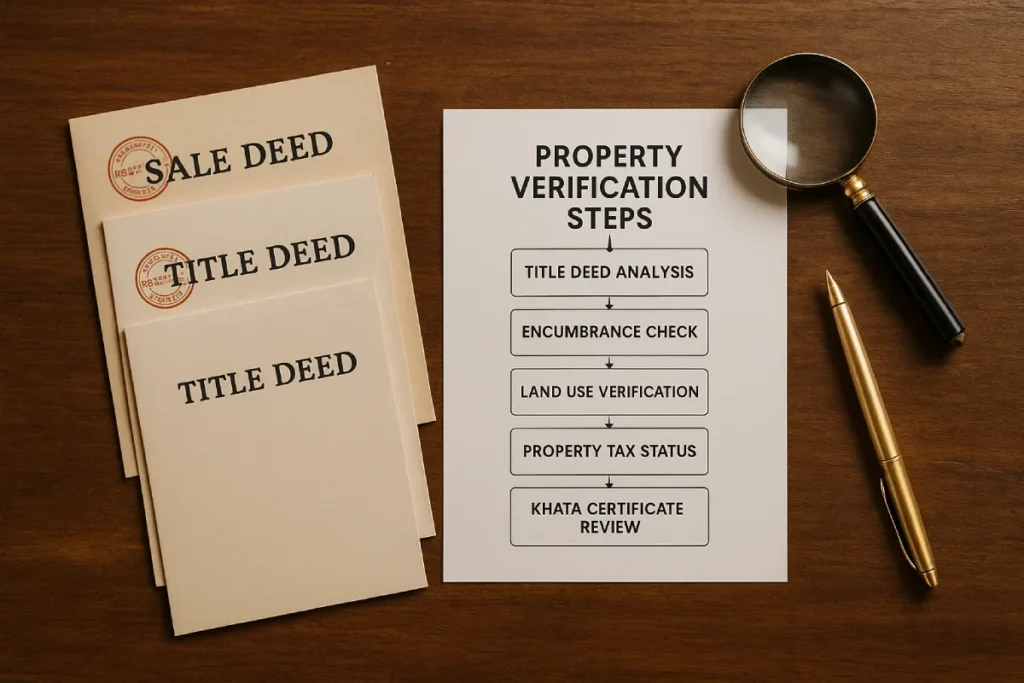
- Obtain certified copies of the sale deed and previous ownership documents
- Apply for an Encumbrance Certificate at the Sub-Registrar’s office
- Verify mutation records at the local revenue/municipal office
- Check for pending litigation through local court records or a lawyer’s search
- Confirm property tax payment status is current
- Physically verify boundaries match document measurements
- Get a lawyer’s title search report before finalizing payment
Should You Hire a Lawyer for This?
Honestly, yes — even though it’s an added cost. A property lawyer’s title search report typically costs a few thousand rupees, which is genuinely negligible compared to the risk of losing lakhs (or your entire investment) to a fraudulent or disputed property purchase.
[link to related guide on adverse possession law in India here]
FAQ
Q1. What is an Encumbrance Certificate and why does it matter? It’s a document confirming the property is free from any mortgage, loan, or legal claims during a specific period, essential before any purchase.
Q2. How far back should property title be verified? Lawyers typically trace ownership at least 30 years back to identify any defects in the chain of title.
Q3. What happens if I buy a property with a disputed title? You could face litigation, loss of the property, or difficulty reselling it later — proper verification prevents this risk.
Q4. Is it necessary to hire a lawyer for property title verification? While not legally mandatory, it’s strongly recommended given the complexity and risk involved in property transactions.
Q5. What is mutation and why is it important? Mutation updates revenue records to reflect the current owner, which is important for tax purposes and future transactions.
Q6. Can I trust a Power of Attorney sale without verification? No, PoA-based sales require extra scrutiny to confirm the PoA is genuine and properly authorized by the original owner.
Conclusion
Skipping property title verification to save a few thousand rupees in legal fees is genuinely one of the costliest mistakes a property buyer can make. Before you sign anything or transfer any money, get the encumbrance certificate, trace the ownership chain, and have a lawyer review the documents. That upfront diligence is what actually protects your investment, not the excitement of a good deal. [link to related article on power of attorney format in India here]