“Someone else can legally claim my land just by occupying it?” Yes — under certain, fairly strict conditions. Adverse possession law is one of those legal concepts that sounds almost unfair at first, until you understand why it exists and how genuinely difficult it actually is to successfully claim.
What Is Adverse Possession?
Quick Answer: Adverse possession allows a person who has openly, continuously, and exclusively occupied someone else’s property — without the owner’s permission — for a statutory period (12 years for private property, 30 years for government property) to claim legal ownership, provided the possession was hostile to the true owner’s title throughout that period.
The Strict Conditions That Must Be Met
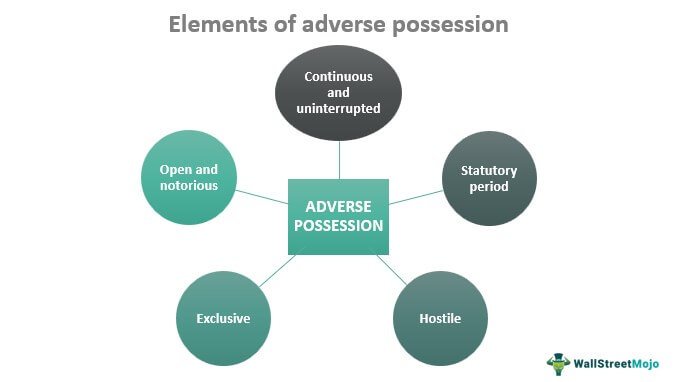
This isn’t as simple as “just living somewhere for 12 years.” Courts require ALL of these elements to be genuinely satisfied:
- Actual possession — physically occupying and using the property, not just claiming it
- Open and notorious — the possession must be visible and obvious, not secretive
- Continuous — uninterrupted possession for the entire statutory period (12 or 30 years)
- Hostile/adverse — without the true owner’s permission, and against their interest
- Exclusive — the claimant possesses it exclusively, not sharing it with the actual owner or others
If even one element is missing or the owner successfully challenges continuity, the adverse possession claim collapses entirely.
12 Years vs 30 Years — Which Applies?
- 12 years: Applies to private property, under the Limitation Act, 1963
- 30 years: Applies to government-owned property — a much higher bar deliberately set to protect public land
This distinction matters enormously in disputes, since occupying government land, even for decades, requires proving possession for a significantly longer, harder-to-establish period.
Why Does This Law Even Exist?
Honestly, I’ve gone back and forth on this myself. The logic is that land shouldn’t sit in legal limbo indefinitely — if a true owner genuinely abandons or ignores their property for over a decade while someone else openly uses, maintains, and treats it as their own, the law eventually recognizes that reality. It’s controversial, sure, but it does incentivize owners to actively monitor their property rather than leaving it neglected for decades.
How to Protect Your Property From Adverse Possession Claims
- Visit and inspect your property regularly, especially if it’s vacant land or an unused portion
- Pay property taxes consistently — this creates a documented paper trail of ownership assertion
- Fence or clearly mark boundaries to prevent unauthorized “open” occupation
- Act immediately if you discover unauthorized occupation — filing a suit for possession interrupts the adverse possession clock
- Avoid informal permissions without documentation — if you let a relative or tenant use land “temporarily,” get it in writing, since undocumented permissive use can later be twisted into a hostile possession claim
What If Someone Files an Adverse Possession Claim Against You?
Don’t panic, but do act quickly. You can defend by showing:
- The possession wasn’t truly continuous (gaps break the claim)
- The occupier had your permission at some point (this defeats “hostile” possession entirely)
- You took legal action within the relevant period that interrupted their claim
- The occupier’s possession wasn’t exclusive or open
Courts place the burden of proof heavily on the person claiming adverse possession — it’s genuinely a difficult claim to succeed with, not an easy shortcut to stealing land, despite how it’s sometimes portrayed.
[link to related guide on property title verification before buying land here]
FAQ
Q1. How many years of occupation are needed for adverse possession in India? 12 years for private property and 30 years for government property, under the Limitation Act.
Q2. Can a tenant claim adverse possession against a landlord? Generally no, since a tenant’s possession is permissive, not hostile, which is a core requirement for adverse possession.
Q3. What breaks an adverse possession claim? Interruption in continuous possession, the owner taking legal action, or proof that possession was permissive rather than hostile.
Q4. Is adverse possession easy to prove in Indian courts? No, courts require strict proof of all elements — open, continuous, hostile, and exclusive possession — making successful claims genuinely difficult.
Q5. Can government land be claimed through adverse possession? It’s theoretically possible but requires 30 years of qualifying possession, a much higher bar than private property claims.
Q6. How can I stop someone from claiming adverse possession of my land? Regularly inspect and use your property, pay taxes, mark boundaries clearly, and take immediate legal action against unauthorized occupation.
Conclusion
Adverse possession law exists as a check against neglected, abandoned property — but it’s far from an easy or automatic claim, and genuine owners who stay reasonably vigilant rarely need to worry about losing land this way. If you own vacant or unused property, the simplest protection is also the most obvious: visit it, use it, document it, and act fast against any unauthorized occupation you discover. [link to related article on how to write a legally valid will in India here]