
Category: Education Law

  • Ragging Isn’t “Just a College Tradition” Anymore — Legally Speaking

    Ragging Isn’t “Just a College Tradition” Anymore — Legally Speaking

    For years, ragging was brushed off as harmless “bonding” between seniors and juniors. The anti-ragging law in India exists precisely because that casual dismissal cost real students their mental health, and in tragic cases, their lives. If you’re a student, parent, or even a college administrator, understanding these rules isn’t optional anymore — it’s mandatory compliance territory.

    What Counts as Ragging Legally?

    Quick Answer: Under UGC Regulations, 2009 and various state anti-ragging laws, ragging includes any act — physical or verbal, in person or online — that causes mental or physical harm, embarrassment, or fear in a student, typically committed by senior students against juniors. It’s a punishable offence, not merely a disciplinary matter.

    The definition deliberately casts a wide net — it’s not limited to physical violence. Verbal abuse, forced tasks, public humiliation, and even certain forms of online harassment between students can qualify.

    Who Enforces Anti-Ragging Rules?

    Every college and university in India is required under UGC regulations to have:

    • An Anti-Ragging Committee — headed typically by the head of institution
    • An Anti-Ragging Squad — for surprise checks in hostels, canteens, and common areas
    • A mandatory anti-ragging affidavit from every student and parent at admission
    • Display of anti-ragging helpline numbers prominently across campus

    I’ve noticed a lot of students sign these affidavits without actually reading them — worth knowing that this isn’t just paperwork; it’s a legal acknowledgment that can be used in proceedings later.

    Punishment for Ragging

    Consequences aren’t limited to a stern warning from the principal. Depending on severity, punishments include:

    1. Suspension or expulsion from the institution
    2. Withholding of scholarships or other benefits
    3. Debarring from appearing in examinations
    4. Rustication from the institution for a specific period
    5. FIR registration and criminal prosecution under relevant IPC/BNS provisions (for serious cases involving assault, criminal intimidation, or worse)
    6. Cancellation of admission

    In genuinely severe cases — where ragging leads to grievous injury or death — the accused can face charges as serious as culpable homicide, not just college disciplinary action.

    How to File an Anti-Ragging Complaint

    1. Call the National Anti-Ragging Helpline (24×7, toll-free) — complaints can be filed anonymously
    2. Approach the college’s Anti-Ragging Committee directly with details of the incident
    3. File a written complaint with evidence (messages, witness statements, medical reports if applicable)
    4. Approach local police to register an FIR if the act involves criminal elements like assault or intimidation
    5. UGC/AICTE portals also allow online complaint registration for higher education institutions

    Picture a first-year engineering student in a hostel far from home, too scared to call family about what’s happening. That’s exactly the gap the anonymous helpline system was designed to close — students don’t need to reveal their identity to get intervention started.

    What Colleges Are Legally Required to Do

    • Investigate any ragging complaint within a strict timeframe (usually within days, not weeks)
    • Take immediate interim action against the accused pending inquiry, if the complaint appears credible
    • Report incidents to the UGC/regulatory body as mandated
    • Cannot suppress or dismiss complaints — failure to act can attract action against the institution itself, including derecognition in serious cases

    Common Myths About Anti-Ragging Law

    • “It’s only a college disciplinary matter” — false; criminal prosecution is very much possible for serious incidents
    • “Only physical ragging counts” — false; verbal, psychological, and online harassment are equally covered
    • “You need to reveal your identity to complain” — false; anonymous complaints are explicitly permitted

    [link to related guide on RTE Act 2009 and student rights here]

    FAQ

    Q1. Is ragging a criminal offence in India? Yes, in addition to disciplinary action by the institution, serious ragging incidents can lead to criminal prosecution under IPC/BNS provisions.

    Q2. Can I file an anti-ragging complaint anonymously? Yes, the national helpline and many college committees accept anonymous complaints to protect the victim’s identity.

    Q3. What is the punishment for ragging in college? Punishments range from suspension and expulsion to FIR registration and criminal prosecution, depending on severity.

    Q4. Does anti-ragging law cover online harassment between students? Yes, cyber-ragging or online harassment between students falls within the scope of anti-ragging regulations.

    Q5. Are colleges legally required to have an anti-ragging committee? Yes, UGC regulations mandate every institution to have an Anti-Ragging Committee and Squad.

    Q6. What should I do if my college ignores a ragging complaint? You can escalate directly to UGC/AICTE, the national anti-ragging helpline, or approach the police and courts if the institution fails to act.

    Conclusion

    The anti-ragging law in India exists because self-regulation by colleges alone wasn’t protecting students — and it still requires active awareness to actually work. If you or someone you know is facing ragging, don’t wait for it to “get better on its own.” Use the helpline, document everything, and escalate without hesitation. The legal framework is genuinely on your side here. [link to related article on child and student rights under education law here
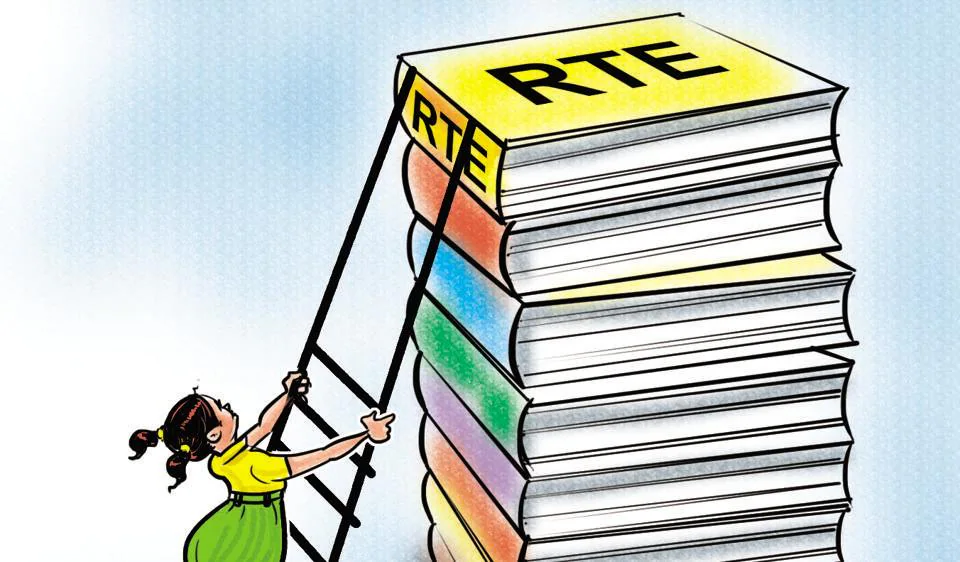
  • The Law That Guarantees Your Child a Seat in School

    The Law That Guarantees Your Child a Seat in School

    Every year around admission season, parents scramble to understand one thing: does the RTE Act 2009 actually apply to their child, and how? I’ve fielded this question from relatives more times than I can count, usually right before the school application deadline, which is honestly the worst time to start figuring it out.

    What Is the RTE Act, in Simple Terms?

    Quick Answer: The Right of Children to Free and Compulsory Education (RTE) Act, 2009 guarantees free and compulsory education to every child aged 6 to 14 years in India. It also mandates that private unaided schools reserve at least 25% of seats in Class 1 for children from economically weaker sections and disadvantaged groups.

    This isn’t a vague policy statement — it’s a legally enforceable right, meaning a child (through their parent/guardian) can approach authorities if this right is denied.

    Who Is Eligible Under RTE?

    Every child between 6 and 14 years falls under this Act’s coverage. But the widely known “25% reservation” clause specifically applies to:

    • Children from Economically Weaker Sections (EWS) — usually based on family income criteria set by the respective state
    • Children from Disadvantaged Groups — SC/ST, socially/educationally backward classes, children with disabilities, and other categories defined by state rules

    Eligibility criteria (particularly income limits for EWS) vary by state, so it’s worth checking your specific state’s education department notification rather than assuming a blanket national figure.

    The 25% Reservation Rule — How It Actually Works

    This is probably the single most searched aspect of the RTE Act 2009. Here’s how it plays out practically:

    1. Private unaided schools must reserve 25% of entry-level class seats (usually Class 1 or pre-primary, depending on the school’s structure)
    2. Reimbursement is provided to the school by the government for these admissions, calculated per-child based on either the actual fee or the state-fixed per-child expenditure, whichever is lower
    3. Admissions under this quota typically happen through an online lottery/draw system managed by state education departments
    4. Required documents usually include income certificate, caste certificate (if applicable), address proof, and birth certificate

    Documents Typically Required

    • Birth certificate of the child
    • Income certificate (for EWS category)
    • Caste/category certificate (if claiming disadvantaged group benefit)
    • Residence/address proof
    • Aadhaar card (child and parent, where applicable)

    Requirements can vary slightly by state, so it’s genuinely worth checking your local state RTE portal before applying — rules aren’t perfectly uniform across India.

    What If a School Refuses RTE Admission?

    This happens more often than it should, unfortunately. If a private school refuses to admit an eligible child under the 25% quota or demands capitation fees, parents can:

    • File a complaint with the District Education Officer or Block Education Officer
    • Approach the State Commission for Protection of Child Rights (SCPCR)
    • In serious cases, file a writ petition before the High Court

    Schools found violating RTE provisions can face penalties, including cancellation of recognition in repeated or serious violations.

    Common Misconceptions About RTE

    • “RTE only applies to government schools” — false, the 25% clause specifically targets private unaided schools
    • “RTE guarantees free education forever” — the mandatory free education clause applies specifically till Class 8 (age 14), though the reserved-quota seat generally continues without fee till that stage
    • “Any low-income family automatically qualifies” — no, specific state-defined income thresholds and documentation are required

    [link to related guide on anti-ragging laws for students in India here]

    FAQ

    Q1. What age group does the RTE Act cover? Children aged 6 to 14 years are covered under the Right to Education Act, 2009.

    Q2. Do private schools have to admit EWS students for free? Yes, private unaided schools must reserve 25% of entry-level seats for EWS/disadvantaged group children, and the government reimburses part of the cost.

    Q3. Can a school reject an RTE application without reason? No, if a child meets eligibility criteria and documentation is complete, refusal without valid grounds can be challenged legally.

    Q4. Is RTE admission only for Class 1? Primarily yes, since it’s designed as an entry-level reservation, though some states extend it to pre-primary classes too.

    Q5. What income limit qualifies a family for EWS category under RTE? This varies by state — there’s no single national figure, so checking your specific state’s notification is essential.

    Q6. Can RTE benefits continue beyond Class 8? The mandatory free education guarantee is specifically for ages 6-14 (roughly till Class 8); continuation beyond that depends on school and state policy.

    Conclusion

    The RTE Act 2009 genuinely changed access to quality education for millions of children, but it only works if parents actually know how to use it. If you believe your child qualifies, don’t wait till the last week of admissions — check your state’s RTE portal early, gather documentation in advance, and don’t hesitate to escalate if a school unfairly denies admission. [link to related article on child rights and education law in India here]