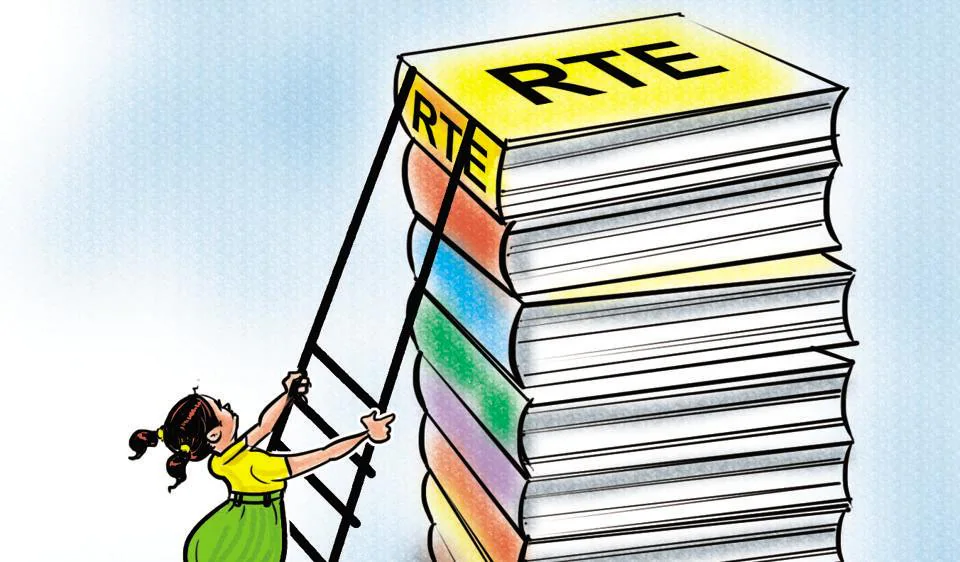
Every year around admission season, parents scramble to understand one thing: does the RTE Act 2009 actually apply to their child, and how? I’ve fielded this question from relatives more times than I can count, usually right before the school application deadline, which is honestly the worst time to start figuring it out.
What Is the RTE Act, in Simple Terms?
Quick Answer: The Right of Children to Free and Compulsory Education (RTE) Act, 2009 guarantees free and compulsory education to every child aged 6 to 14 years in India. It also mandates that private unaided schools reserve at least 25% of seats in Class 1 for children from economically weaker sections and disadvantaged groups.
This isn’t a vague policy statement — it’s a legally enforceable right, meaning a child (through their parent/guardian) can approach authorities if this right is denied.
Who Is Eligible Under RTE?
Every child between 6 and 14 years falls under this Act’s coverage. But the widely known “25% reservation” clause specifically applies to:
- Children from Economically Weaker Sections (EWS) — usually based on family income criteria set by the respective state
- Children from Disadvantaged Groups — SC/ST, socially/educationally backward classes, children with disabilities, and other categories defined by state rules
Eligibility criteria (particularly income limits for EWS) vary by state, so it’s worth checking your specific state’s education department notification rather than assuming a blanket national figure.
The 25% Reservation Rule — How It Actually Works
This is probably the single most searched aspect of the RTE Act 2009. Here’s how it plays out practically:
- Private unaided schools must reserve 25% of entry-level class seats (usually Class 1 or pre-primary, depending on the school’s structure)
- Reimbursement is provided to the school by the government for these admissions, calculated per-child based on either the actual fee or the state-fixed per-child expenditure, whichever is lower
- Admissions under this quota typically happen through an online lottery/draw system managed by state education departments
- Required documents usually include income certificate, caste certificate (if applicable), address proof, and birth certificate
Documents Typically Required
- Birth certificate of the child
- Income certificate (for EWS category)
- Caste/category certificate (if claiming disadvantaged group benefit)
- Residence/address proof
- Aadhaar card (child and parent, where applicable)
Requirements can vary slightly by state, so it’s genuinely worth checking your local state RTE portal before applying — rules aren’t perfectly uniform across India.
What If a School Refuses RTE Admission?
This happens more often than it should, unfortunately. If a private school refuses to admit an eligible child under the 25% quota or demands capitation fees, parents can:
- File a complaint with the District Education Officer or Block Education Officer
- Approach the State Commission for Protection of Child Rights (SCPCR)
- In serious cases, file a writ petition before the High Court
Schools found violating RTE provisions can face penalties, including cancellation of recognition in repeated or serious violations.
Common Misconceptions About RTE
- “RTE only applies to government schools” — false, the 25% clause specifically targets private unaided schools
- “RTE guarantees free education forever” — the mandatory free education clause applies specifically till Class 8 (age 14), though the reserved-quota seat generally continues without fee till that stage
- “Any low-income family automatically qualifies” — no, specific state-defined income thresholds and documentation are required
[link to related guide on anti-ragging laws for students in India here]
FAQ
Q1. What age group does the RTE Act cover? Children aged 6 to 14 years are covered under the Right to Education Act, 2009.
Q2. Do private schools have to admit EWS students for free? Yes, private unaided schools must reserve 25% of entry-level seats for EWS/disadvantaged group children, and the government reimburses part of the cost.
Q3. Can a school reject an RTE application without reason? No, if a child meets eligibility criteria and documentation is complete, refusal without valid grounds can be challenged legally.
Q4. Is RTE admission only for Class 1? Primarily yes, since it’s designed as an entry-level reservation, though some states extend it to pre-primary classes too.
Q5. What income limit qualifies a family for EWS category under RTE? This varies by state — there’s no single national figure, so checking your specific state’s notification is essential.
Q6. Can RTE benefits continue beyond Class 8? The mandatory free education guarantee is specifically for ages 6-14 (roughly till Class 8); continuation beyond that depends on school and state policy.
Conclusion
The RTE Act 2009 genuinely changed access to quality education for millions of children, but it only works if parents actually know how to use it. If you believe your child qualifies, don’t wait till the last week of admissions — check your state’s RTE portal early, gather documentation in advance, and don’t hesitate to escalate if a school unfairly denies admission. [link to related article on child rights and education law in India here]