“Is this bailable?” It’s usually the very first question people ask their lawyer once an FIR gets registered — often before they even understand what they’re accused of. Understanding the bailable vs non-bailable offence distinction genuinely changes how you approach the entire case, from strategy to expectations.
The Basic Difference
Quick Answer: In a bailable offence, bail is a matter of right — the police or court must grant it if requested, often on furnishing a bond. In a non-bailable offence, bail is a matter of judicial discretion, granted by a court only after considering factors like the severity of the crime and risk of the accused fleeing or tampering with evidence.
That single word — “right” versus “discretion” — changes everything about how the process unfolds.
Bailable Offences: What You Need to Know
These are generally less serious offences. Examples include:
- Simple hurt (Section 323 IPC / equivalent under BNS)
- Defamation
- Public nuisance
- Cheque bounce cases in certain circumstances
For bailable offences, even the police officer at the station can grant bail — you don’t necessarily need to go to court at all. It’s usually just a matter of furnishing a personal bond or surety.
Non-Bailable Offences: A Different Ballgame
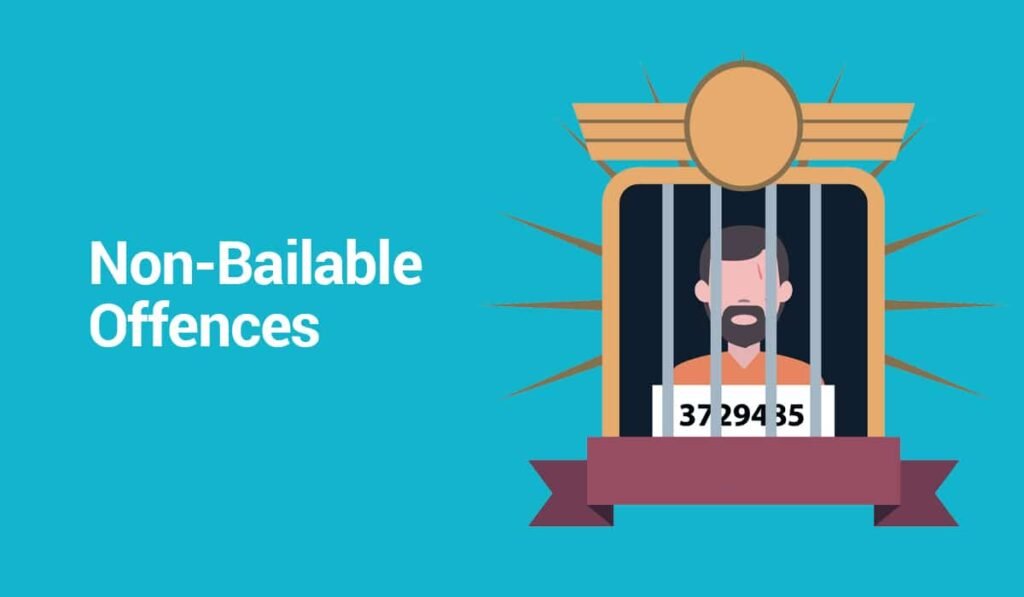
These involve more serious crimes — think murder, rape, dacoity, or large-scale financial fraud. Here, bail isn’t automatic. You (or your lawyer) need to formally apply before a Magistrate or Sessions Court, and the judge decides based on the facts.
I’ve noticed people sometimes assume “non-bailable” means “no bail ever” — that’s simply not true. It just means bail isn’t a right; it has to be argued for and granted at the court’s discretion.
How Courts Decide Bail in Non-Bailable Cases
Judges typically weigh:
- Nature and gravity of the offence
- Evidence available against the accused at that stage
- Possibility of the accused fleeing from trial
- Risk of tampering with evidence or influencing witnesses
- Criminal antecedents of the accused, if any
- Health, age, and personal circumstances of the accused
Table: Bailable vs Non-Bailable at a Glance
| Aspect | Bailable Offence | Non-Bailable Offence |
| Bail as right or discretion | Right | Discretion of court |
| Who can grant bail | Police officer or court | Only court (Magistrate/Sessions/HC) |
| Typical examples | Simple hurt, defamation | Murder, rape, large-scale fraud |
| Complexity of process | Simple, often quick | Requires formal application and hearing |
Can Non-Bailable Offences Still Get Bail Quickly?
Yes, and this is where the bailable vs non-bailable offence distinction gets a bit more nuanced. Depending on the specific facts — weak evidence, procedural lapses by police, or genuine grounds — courts do grant bail in non-bailable cases too, sometimes within days. It’s simply not automatic the way it is for bailable offences.
A relative of mine was once falsely implicated in a cheating case (non-bailable) over a business dispute — with proper documentation showing the transaction was genuine, bail came through within a week. So “non-bailable” isn’t a life sentence of denial; it just means you need to make your case.
Cognizable vs Bailable — Don’t Confuse These Terms
A common mix-up: “cognizable” refers to whether police can arrest without a warrant, while “bailable” refers to whether bail is a right or discretion. An offence can be cognizable AND bailable, or non-cognizable AND non-bailable — they’re independent classifications, not the same axis.
[link to related guide on the anticipatory bail process in India here]
FAQ
Q1. Can police grant bail directly in bailable offences? Yes, in bailable offences, the police officer at the station can grant bail without needing a court order.
Q2. Is bail guaranteed in non-bailable offences? No, it’s at the discretion of the court, based on factors like severity of the offence and risk factors.
Q3. What are some common examples of non-bailable offences? Murder, rape, kidnapping, dacoity, and large-scale financial fraud are typical non-bailable offences.
Q4. Can a non-bailable offence still result in bail within a few days? Yes, depending on the evidence and circumstances, courts can and do grant bail quickly even in non-bailable cases.
Q5. Is cognizable the same as non-bailable? No, these are separate classifications — cognizable relates to arrest without warrant, bailable relates to the right to bail.
Q6. Do I need a lawyer to apply for bail in a bailable offence? Not strictly necessary since it’s often a straightforward process, but legal guidance helps avoid procedural delays.
Conclusion
Knowing the bailable vs non-bailable offence difference isn’t just legal trivia — it directly shapes what you should expect and how quickly you (or a loved one) might get relief after an FIR. If you’re ever in this situation, don’t panic at the word “non-bailable” — it simply means the fight for bail happens in court rather than at the police station. [link to related article on how to file an FIR in India here]