Author: shrwanswami@gmail.com

  • Blogger Outreach in Public-Interest Communication: Trust Before Reach

    A legal aid group explaining a new service, a public agency correcting misinformation, or a nonprofit raising awareness about a community issue may all need to reach people beyond their own website. Blogger outreach can help—but in law and public service, credibility matters at least as much as audience size. A poorly handled campaign can undermine the message it was meant to spread.

    At its simplest, blogger outreach is the process of identifying relevant writers or publishers, building a professional relationship, and sharing information that may be useful to their readers. A guide to blogger outreach can help with the mechanics. For public-interest work, though, the approach should also account for accuracy, transparency, privacy, and the publisher’s independence.

    Start With a Public-Service Purpose

    Before contacting anyone, be clear about what the campaign is intended to accomplish. Is the goal to explain how to access a service, make an unfamiliar legal process easier to understand, or direct readers to reliable information? A specific purpose makes it easier to choose the right publications and assess whether the outreach has been useful.

    Reach alone is a poor measure of success. A specialist blog with a modest audience may be more valuable than a large general-interest site if its readers are directly affected by the issue. Consider the publisher’s subject matter, audience, editorial standards, and past coverage—not just follower counts or traffic estimates.

    Make the First Contact Relevant and Respectful

    A mass message that begins “Dear blogger” is unlikely to build trust. A better note shows that you understand the publication and explains, briefly, why the information could matter to its readers. Offer a useful resource, a knowledgeable interviewee, or a clear explanation of a new development. Don’t assume that a writer owes you coverage simply because you sent a pitch.

    Keep materials easy to assess. Provide the source of important claims, identify the organization you represent, and make clear what you are asking for. If the material is a press statement or a suggested article, say so; don’t present promotional copy as independent reporting. Give writers room to ask questions, decline, or reach their own conclusions.

    Accuracy Is a Legal and Ethical Safeguard

    Public-facing claims can create real consequences. Incorrect information about eligibility, deadlines, rights, or public services may cause people to miss an opportunity or make a harmful decision. Have subject-matter experts review factual material, check dates and links, and distinguish settled facts from interpretation or opinion.

    Be particularly careful when a topic involves an active case, allegations against an identifiable person, or confidential information. Avoid sharing personal details unless there is a clear, lawful reason and the necessary permissions are in place. Even information that appears online may not be appropriate to reuse in a campaign. When legal questions arise, obtain advice suited to the relevant jurisdiction rather than relying on a generic checklist.

    Disclose Relationships and Paid Activity

    If a publisher is paid, receives a benefit, or has another material connection to the organization, readers should not be left to guess. Disclosure rules differ by jurisdiction and platform, so check the applicable requirements before a campaign begins. A clear label can help readers understand whether content is sponsored or reflects an independent editorial decision.

    Payment for a placement does not automatically make a piece misleading, but hiding the arrangement can damage trust and may create compliance problems. Agree in writing on what is being purchased, what the publisher controls, how the content will be identified, and whether it can be corrected or removed if important facts change. Do not ask a writer to promise a favorable view in exchange for payment.

    Use Outside Help Carefully

    Smaller organizations may not have staff who can research publications, prepare accessible materials, or manage outreach. Freelancers can provide support with writing, design, research, or campaign coordination, but the organization should retain responsibility for its claims and approvals. Share only the information a contractor needs, and set clear expectations about confidentiality, permissions, review, and ownership of the finished work.

    For example, a team comparing ways to source specialist help may look at marketplaces such as Osdire, where buyers hire freelancers across more than 900 categories, including writing, design, technology, and marketing. Its pricing is flat, and payment is held while an order is underway and released after the buyer approves the delivered work. As with any marketplace, check a freelancer’s relevant experience, agree on the scope in advance, and review work before it is used publicly.

    Measure Value Without Pressuring Publishers

    Track practical outcomes: whether accurate information reached the intended audience, whether people used a service, or whether a confusing issue became easier to understand. Referral visits and engagement can offer clues, but they do not prove that readers understood or benefited from the material. Avoid treating a mention or link as an entitlement, and don’t pressure publishers to alter independent coverage to improve campaign metrics.

    Trust Is the Long-Term Result

    Effective outreach is not simply a way to secure attention. It is a relationship built on relevant information, honest communication, and respect for editorial independence. For legal and public-service organizations, those habits protect more than a campaign’s reputation: they help the public judge who is speaking, what is being claimed, and where to find dependable information.

  • Where Expert Knowledge Matters Most in Complex Legal Disputes

    Where Expert Knowledge Matters Most in Complex Legal Disputes

    Not every legal dispute can be understood by reading a contract, checking a statute, or comparing two versions of an email. Some cases depend on details that sit outside ordinary legal knowledge. A machine failed. A patient suffered an unexpected outcome. A building developed serious defects. A company’s financial records don’t quite add up.

    These are the situations where specialized expertise can bring a little order to a very messy picture.

    Expert witnesses help legal teams understand technical questions, evaluate evidence, and explain complicated subjects in a way that courts can actually follow. Their role isn’t to replace the lawyer or tell a judge what decision to make. Instead, they provide informed opinions based on their professional knowledge and the evidence available to them.

    The right expert can be extremely useful. The wrong one, frankly, can make an already difficult case harder.

    When Medical Knowledge Becomes Part of a Legal Dispute

    Medical disputes are among the clearest examples of why specialized testimony matters. A case involving an injury, diagnosis, treatment decision, or alleged professional negligence may depend on questions that aren’t obvious to someone without clinical training.

    Medical expert witnesses can review medical records, treatment histories, diagnostic information, and relevant professional standards. Depending on the circumstances, they may explain whether a particular course of treatment was consistent with accepted practice, whether an injury could reasonably have resulted from a particular event, or how a medical condition may affect someone’s future.

    The details matter enormously.

    A medical record might contain dozens of entries, abbreviations, test results, and treatment notes. One small detail could change how the entire sequence of events is understood. An experienced medical expert can put those details into context rather than simply repeating what the records say.

    Business Disputes Are Rarely Just About Numbers

    Financial and commercial disagreements can look straightforward until someone starts examining the underlying numbers.

    A company may claim lost profits after a contract dispute. A shareholder may challenge a valuation. Two businesses may disagree over whether an acquisition caused financial damage. Behind each situation are assumptions about revenue, expenses, market conditions, growth, risk, and sometimes years of financial history.

    This is where expertise becomes particularly useful in business litigation.

    A qualified financial professional may examine accounting records, forecasts, market data, transaction documents, and other evidence to determine whether a claimed loss is reasonable. They may also identify assumptions that don’t hold up under closer examination.

    That’s important because a large number on a spreadsheet doesn’t automatically make it a legitimate measure of damages.

    Real Estate Disputes Can Hide Technical Problems

    Property disputes are another area where expert knowledge can make a substantial difference. Real estate transactions involve much more than buying and selling buildings or land. Issues can arise over valuation, construction quality, property boundaries, environmental conditions, zoning, leases, development costs, and alleged defects.

    In a real estate dispute, the relevant expert might be an appraiser, engineer, architect, environmental professional, surveyor, or another specialist depending on the question involved.

    Take a valuation disagreement. Two professionals may look at the same property and arrive at different numbers. That doesn’t necessarily mean one person made a mistake. They may have used different comparable properties, assumptions about income, market conditions, or valuation methods.

    Understanding those differences can be far more useful than simply arguing over which number “looks right.”

    Choosing an Expert Requires More Than a Quick Search

    It’s tempting to think that the expert with the longest résumé must be the best choice.

    Not always.

    Qualifications matter, but relevance matters too. An expert should have meaningful experience related to the specific issue being disputed. Someone with decades of experience in one area may not be the right person for a highly specialized question in another.

    Attorneys should also consider communication skills. An expert may understand the subject perfectly but struggle to explain it to people who aren’t specialists.

    That’s a real problem.

    A courtroom isn’t a professional conference. A judge or jury shouldn’t need an advanced degree to understand the basic reasoning behind an expert’s opinion.

    Independence Can Strengthen an Expert’s Opinion

    An expert’s credibility often depends on appearing independent and evidence-driven.

    That means they shouldn’t simply agree with everything the retaining attorney believes. If the evidence points in an uncomfortable direction, a credible expert should be willing to acknowledge it.

    This doesn’t weaken the case automatically. In some situations, it can actually strengthen the expert’s overall credibility.

    People tend to trust professionals who recognize limitations.

    For example, an expert might say that the available evidence strongly supports one conclusion but that certain records weren’t available to them. That’s more believable than pretending there are no uncertainties at all.

    The Method Behind the Opinion Matters

    A professional opinion should have a foundation.

    What documents were reviewed? What data was considered? What methodology was used? Were alternative explanations examined? Are the assumptions reasonable?

    These questions can become particularly important when opposing counsel challenges the testimony.

    An expert who can’t explain how a conclusion was reached may have difficulty defending it. On the other hand, an expert who understands the reasoning from beginning to end can usually explain why the methodology was appropriate and where its boundaries lie.

    That’s why legal teams should spend time reviewing the expert’s actual analysis rather than focusing only on credentials.

    Experts Can Help Before Anyone Enters a Courtroom

    Expert involvement doesn’t always end with testimony.

    A specialist can help attorneys evaluate a case during its early stages. They may review documents, identify important evidence, suggest additional questions for discovery, or point out technical weaknesses in an argument.

    Sometimes this work changes the entire direction of a dispute.

    An attorney may initially believe a claim is strong. After reviewing the evidence, an expert might find that one of the key assumptions isn’t supported. That’s not necessarily bad news. Discovering the issue early gives the legal team an opportunity to address it before the other side does.

    It can save time, money, and plenty of headaches.

    Preparing for Cross-Examination

    Being knowledgeable isn’t enough when an expert is expected to testify.

    Cross-examination can be intense. Attorneys may challenge qualifications, question methodology, compare previous statements, or suggest that another interpretation of the evidence is equally plausible.

    Good preparation helps experts stay focused.

    They should know their reports thoroughly, understand the supporting evidence, and be prepared to explain technical subjects without becoming defensive. They also need to recognize when a question goes beyond the limits of their expertise.

    Saying “I don’t know” can be much better than guessing.

    Technology Has Changed the Way Experts Work

    Experts now have access to powerful analytical tools. Financial professionals can process enormous datasets. Engineers can use sophisticated modeling software. Medical specialists can examine detailed imaging and digital records. Property professionals can analyze extensive market information.

    But technology doesn’t eliminate professional judgment.

    A computer can process information quickly. It can’t always decide whether the underlying assumptions make sense. That’s still a human responsibility.

    The strongest expert analysis usually combines modern tools with experience and common sense.

    Bringing Clarity to Difficult Cases

    Legal disputes are complicated partly because they involve people, evidence, competing interpretations, and uncertainty. Add a technical subject to the mix and things can become confusing very quickly.

    A good expert doesn’t magically solve those problems.

    What they can do is make them easier to understand.

    Whether the dispute involves medicine, finance, property, engineering, or another specialized field, the right professional can provide context that would otherwise be missing. They can test assumptions, explain evidence, identify weaknesses, and help attorneys make more informed decisions.

    Ultimately, that’s the real value of expert testimony. It isn’t about using complicated language or making a case sound more sophisticated.

    It’s about helping everyone in the room understand what the evidence actually means.

    And when a legal dispute turns on details that most people don’t encounter in everyday life, that kind of clarity can be incredibly valuable.

  • Domestic Violence Attorney: Protect Your Rights Early

    Domestic Violence Attorney: Protect Your Rights Early

    Domestic violence allegations can affect your freedom, family relationships, reputation, employment, and future. Speaking with a domestic violence attorney as soon as possible can help you understand the accusations, protect your legal rights, and make informed decisions about your defense. JKJ provides criminal defense guidance for individuals facing serious allegations in Florida, helping clients understand their legal options and the potential consequences of a case.

    An accusation is not the same as a conviction. Every case involves its own circumstances, evidence, witnesses, and legal considerations. Taking the situation seriously from the beginning can help prevent avoidable mistakes while giving legal counsel an opportunity to examine the facts carefully.

    Why You Need a Domestic Violence Attorney

    Domestic violence cases can become complicated quickly. Police officers may make an arrest based on statements, visible injuries, witness accounts, or other circumstances surrounding an alleged incident. However, the initial report may not contain every detail that could become important later.

    A domestic violence attorney can review the allegations and available evidence to identify issues that may affect the case. This can include examining whether statements are consistent, whether physical evidence supports the allegations, and whether law enforcement followed appropriate procedures.

    Legal representation can also help you understand what happens after an arrest or accusation. Depending on the circumstances, a case may involve court appearances, protective orders, negotiations, hearings, or trial preparation.

    Understanding the Nature of the Allegation

    Florida law recognizes several offenses that may involve domestic relationships. The specific charge can depend on the conduct alleged and the relationship between the individuals involved.

    Domestic violence allegations may arise from situations involving:

    • Spouses or former spouses
    • People who share a child
    • Individuals who currently live together
    • Former household members
    • People involved in dating relationships
    • Other qualifying family or household relationships

    The exact circumstances matter. A disagreement between two people can be interpreted differently depending on the evidence, statements provided to law enforcement, and events leading up to the alleged incident.

    Rather than making assumptions based on the accusation alone, the facts should be examined carefully before determining the appropriate legal response.

    Evidence Can Shape a Domestic Violence Defense

    Evidence is central to any criminal case. Police reports, photographs, videos, messages, witness statements, medical records, and other documentation may all become relevant depending on the allegations.

    A detailed review can help identify information that supports or challenges the prosecution’s version of events. For example, text messages exchanged before or after an alleged incident may provide context that is not reflected in an initial police report.

    Important evidence may include:

    • Police and incident reports
    • Photographs of alleged injuries or property damage
    • Surveillance or cellphone video
    • Text messages and emails
    • Social media communications
    • Witness statements
    • Medical documentation
    • Call records and other communications
    • Previous interactions between the parties

    Preserving potentially relevant evidence is important. Messages should not be deleted, photographs should not be altered, and records should be maintained in their original form whenever possible. Attempting to hide or manipulate information can create additional complications.

    What Happens After a Domestic Violence Arrest?

    The process following an arrest can be stressful and confusing. The accused person may need to address release conditions, court dates, protective orders, and other restrictions while the criminal case moves forward.

    One of the most important steps is understanding and following every applicable court order. A no-contact provision, injunction, or other restriction may limit communication or physical contact with the alleged victim. Even when emotions are high, violating such an order can result in additional legal consequences.

    Avoid contacting the alleged victim to argue about the accusation, request a statement change, discuss the case, or attempt to resolve the matter personally. Communication that appears harmless may later be interpreted differently when presented in court.

    Instead, legal questions should be directed to qualified counsel. This allows communication about the case to be handled with greater care.

    Protect Your Rights During the Investigation

    Statements made during or after an investigation can become significant. When questioned by law enforcement, it is important to understand the right to remain silent and the right to seek legal counsel.

    Trying to explain everything immediately may seem like the easiest way to resolve a misunderstanding. However, statements made under pressure, anger, fear, or confusion can sometimes create additional issues.

    Avoid discussing the case with friends, coworkers, or people who may later become witnesses. Public comments and social media posts can also become relevant. A frustrated post, message, or comment may be taken out of context or presented as evidence.

    Practical steps after an allegation include:

    1. Stay calm and avoid confrontation. Do not escalate an argument with the alleged victim or other involved individuals.
    2. Follow all court orders. Pay close attention to no-contact provisions, injunctions, and other restrictions.
    3. Preserve evidence. Keep messages, photographs, videos, records, and other relevant materials.
    4. Avoid discussing the case publicly. Social media activity can create additional complications.
    5. Keep track of court requirements. Missing an appearance or failing to comply with an order may create further legal problems.
    6. Seek legal advice promptly. Early guidance can help clarify available options and the next steps.

    These actions do not determine the outcome of a case, but they can help prevent unnecessary complications while the allegations are being evaluated.

    How a Criminal Defense Lawyer Reviews the Case

    A thorough defense requires more than simply reading the accusation. Legal counsel may examine the entire sequence of events and compare the available evidence with the claims made by the prosecution.

    This process may involve reviewing police reports, photographs, recordings, witness accounts, medical records, digital communications, and other relevant information. The circumstances surrounding the alleged incident can also provide important context.

    Questions may include:

    • Are witness statements consistent?
    • Does physical evidence support the allegation?
    • Are important facts missing from the initial report?
    • Are there contradictions between different accounts?
    • Were proper investigative procedures followed?
    • Are there relevant messages or recordings?
    • Could another interpretation of the events exist?
    • Are there constitutional or procedural concerns?

    The answers will depend on the individual case. No two domestic violence allegations are identical, which is why a defense should be based on the actual evidence rather than assumptions.

    Potential Consequences Can Extend Beyond Court

    A domestic violence conviction can affect more than the immediate criminal case. Depending on the offense and circumstances, consequences may involve incarceration, fines, probation, court-ordered programs, restrictions on contact, and other penalties.

    There may also be consequences affecting employment, professional opportunities, family relationships, housing, and other areas of life. Certain convictions can create additional restrictions under federal or state law.

    Family-related matters can make these cases especially sensitive. When children, divorce proceedings, separation, or custody disputes are involved, an accusation may influence issues beyond the criminal courtroom.

    Because the potential consequences vary by case, obtaining case-specific legal guidance is important. General information found online cannot replace an assessment of the actual allegations and evidence.

    Why Local Legal Experience Matters

    Choosing legal representation with knowledge of the local court system can be valuable when facing criminal allegations. A lawyer familiar with Fort Pierce and the surrounding Treasure Coast area understands the local legal environment and the procedures that can affect a criminal case.

    JKJ focuses on criminal defense matters and provides legal information for individuals facing domestic violence allegations in Fort Pierce. The firm’s published information discusses reviewing evidence, witness accounts, police procedures, communications, and potential constitutional concerns when evaluating a domestic violence case.

    Local knowledge does not guarantee a particular result. However, familiarity with the court system, legal procedures, and common issues in criminal cases can help a defendant better understand the process and available legal options.

    Avoid Common Mistakes After an Allegation

    Certain actions can make a difficult situation more complicated. One common mistake is attempting to contact the alleged victim directly to settle the disagreement. Even if the intention is simply to apologize or explain what happened, such communication can potentially create additional legal concerns.

    Another mistake is deleting messages or social media posts. Preserving information is generally safer than attempting to remove evidence.

    Ignoring court paperwork is another serious concern. Court dates, release conditions, and protective orders should be treated as important legal obligations. Failure to comply can lead to additional consequences.

    Finally, assuming that an accusation will automatically disappear can delay important decisions. A prompt consultation allows the circumstances to be reviewed while evidence and memories are still available.

    Building a Defense Based on the Facts

    There is no single defense strategy that applies to every domestic violence case. The appropriate approach depends on the charge, evidence, statements, witnesses, prior history, and circumstances surrounding the alleged incident.

    In some situations, the evidence may raise questions about whether the alleged conduct occurred as described. In others, inconsistencies between accounts may require closer examination. Procedural or constitutional concerns may also become relevant.

    Possible legal approaches can include seeking dismissal, challenging evidence, negotiating an appropriate resolution, or preparing for trial when necessary. The proper strategy should be determined after reviewing the facts and applicable law.

    A defendant should receive clear information about the potential advantages and risks of available options before making important decisions.

    Take Domestic Violence Allegations Seriously

    A domestic violence accusation can create uncertainty, stress, and serious concerns about the future. While the situation may feel overwhelming, taking practical steps early can help protect important legal rights.

    Do not attempt to handle a criminal accusation through arguments, social media posts, or direct confrontations. Follow applicable court orders, preserve relevant evidence, avoid unnecessary discussions about the case, and seek qualified legal guidance.

    Early preparation also provides an opportunity to identify important facts before they are forgotten or difficult to verify. The sooner the circumstances are reviewed, the sooner potential legal issues can be identified and addressed.

    Conclusion

    Facing a domestic violence accusation can have consequences that extend far beyond the courtroom. A careful review of the allegations, evidence, witness statements, communications, and investigative procedures can provide a clearer understanding of the legal situation.

    For individuals facing allegations in Fort Pierce or surrounding communities, JKJ provides criminal defense information and legal representation focused on protecting the rights of accused individuals. Consulting a domestic violence attorney promptly can help you understand the charges, evaluate potential defense strategies, and make informed decisions about the next stage of your case.


  • Disciplinary Action Isn’t Always the Final Word

    Disciplinary Action Isn’t Always the Final Word

    Getting a disciplinary order — whether it’s a warning, reduction in rank, or even removal from service — feels final in the moment. It isn’t, necessarily. Every government employee has the right to file a departmental appeal, and knowing how to do this properly can genuinely reverse or reduce an unjust punishment.

    What Is a Departmental Appeal?

    Quick Answer: A departmental appeal is a formal challenge filed by a government employee against a disciplinary order (like censure, withholding of increments, reduction in rank, or dismissal) before a designated appellate authority, as provided under service rules such as the CCS (CCA) Rules, 1965, or equivalent state regulations.

    Who Can File an Appeal and Against What?

    Any government employee against whom a disciplinary penalty has been imposed can appeal — whether it’s a “minor penalty” (censure, withholding of increment) or a “major penalty” (reduction in rank, compulsory retirement, removal, or dismissal from service).

    The appellate authority is typically the next higher authority above the one that imposed the original penalty — for instance, if a Divisional officer imposed the penalty, the appeal usually goes to the Regional or Head Office level authority.

    Step-by-Step Departmental Appeal Process

    1. Obtain a copy of the disciplinary order with full reasoning, if not already provided
    2. Draft the appeal memorandum clearly stating grounds — procedural lapses, disproportionate punishment, lack of evidence, or violation of natural justice
    3. Submit within the prescribed time limit — typically 45 days from the date of the order under CCS (CCA) Rules, though this can sometimes be condoned for genuine delay
    4. Appellate authority reviews the entire inquiry record, evidence, and the employee’s submissions
    5. Personal hearing, if requested and granted (not always mandatory, but often helpful)
    6. Appellate order issued — can confirm, reduce, enhance, or set aside the original penalty entirely

    Grounds That Actually Work in Appeals

    Not every appeal succeeds — vague complaints like “I don’t think it’s fair” rarely move an appellate authority. Stronger grounds include:

    • Violation of principles of natural justice (no proper opportunity to be heard, denial of defense assistance)
    • Inquiry officer’s findings not supported by evidence on record
    • Disproportionate punishment compared to the actual misconduct proven
    • Procedural non-compliance — chargesheet not properly served, inquiry conducted without following prescribed steps
    • Bias or mala fide intent on the part of the disciplinary or inquiry authority

    What If the Departmental Appeal Fails?

    If the appellate authority upholds the penalty, you’re not entirely out of options:

    1. Review Petition — in some services, a review application to a higher authority is permitted
    2. Central/State Administrative Tribunal (CAT/SAT) — you can challenge the disciplinary and appellate order here
    3. High Court Writ Petition under Article 226 — particularly effective if natural justice was clearly violated
    4. Supreme Court — in rare cases involving substantial questions of law, via SLP

    Tribunals and courts generally don’t re-evaluate evidence like a fresh trial — they mainly examine whether the process was fair and the punishment proportionate, so your appeal should focus heavily on these aspects rather than just re-arguing facts.

    Tips for a Stronger Appeal

    • File within the deadline — late appeals face additional hurdles even if the merits are strong
    • Attach all relevant inquiry documents, evidence, and prior representations
    • Focus on procedural and proportionality arguments, not just emotional appeals
    • Consider engaging a lawyer experienced in service law matters, especially for major penalty appeals
    • Keep copies of everything submitted, with acknowledgment of receipt from the department

    [link to related guide on suspension rules for government employees here]

    FAQ

    Q1. What is the time limit to file a departmental appeal in India? Typically 45 days from the date of the disciplinary order under CCS (CCA) Rules, though this can vary by service and sometimes be condoned.

    Q2. Can an appeal increase the punishment instead of reducing it? Yes, in rare cases the appellate authority can enhance the penalty, though this requires giving the employee an opportunity to respond first.

    Q3. Is a personal hearing mandatory during a departmental appeal? Not always mandatory, but requesting one can help present your case more effectively, especially in complex matters.

    Q4. What happens if my departmental appeal is rejected? You can approach the Central/State Administrative Tribunal or file a writ petition before the High Court challenging the order.

    Q5. Can I hire a lawyer for a departmental appeal? Yes, especially for major penalty cases, engaging a service law expert significantly improves the quality of your appeal.

    Q6. What are the strongest grounds for a successful departmental appeal? Violation of natural justice, lack of evidence supporting the inquiry findings, and disproportionate punishment tend to be the most successful grounds.

    Conclusion

    A disciplinary order isn’t automatically the end of the road — the departmental appeal process exists precisely to correct unfair, disproportionate, or procedurally flawed decisions. If you’re facing disciplinary action, act quickly within the deadline, build your appeal around procedural fairness and proportionality, and don’t hesitate to escalate to the tribunal if the departmental appeal doesn’t bring genuine relief. [link to related article on suspension rules for government employees here]

  • Getting Suspended Doesn’t Mean You’re Guilty

    Getting Suspended Doesn’t Mean You’re Guilty

    There’s a lot of stigma and misunderstanding around what suspension actually means for a government employee. It’s not a punishment in itself — it’s a precautionary measure pending inquiry. Understanding the actual suspension rules governing government employees helps you respond correctly instead of panicking or, worse, staying silent when you should be asserting your rights.

    What Does Suspension Legally Mean?

    Quick Answer: Suspension of a government employee is a temporary measure, typically imposed when a disciplinary inquiry or criminal case is pending, that bars the employee from performing official duties while continuing to draw a subsistence allowance. It is governed by service conduct rules like the CCS (CCA) Rules, 1965, for central government employees, or equivalent state rules.

    Grounds on Which Suspension Can Be Ordered

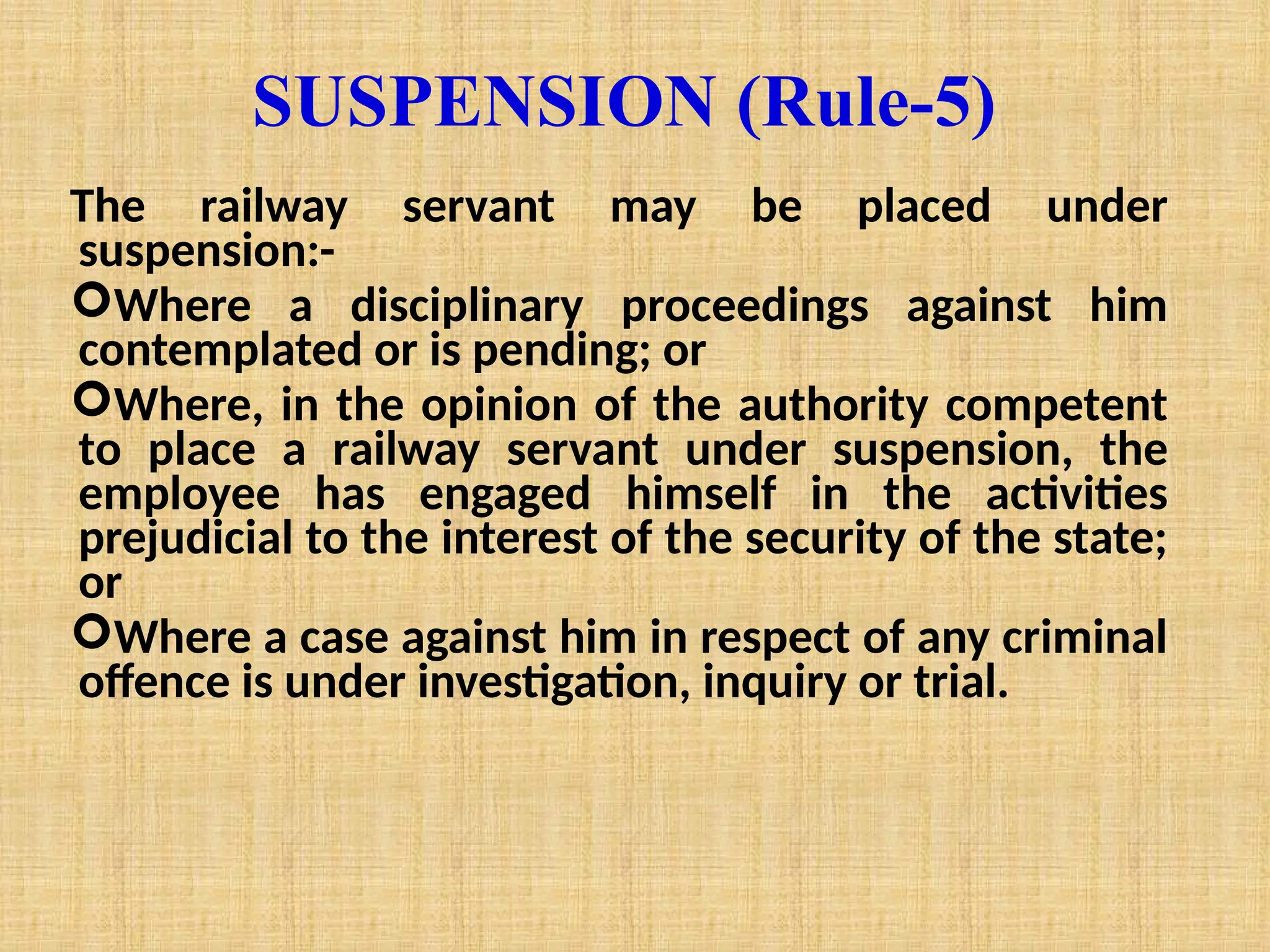
    An employee can typically be placed under suspension when:

    1. A disciplinary proceeding is contemplated or pending against them
    2. A criminal case involving moral turpitude is under investigation or trial
    3. The employee is detained in custody for more than 48 hours
    4. Continuing in the post could hamper the ongoing inquiry or is against public interest

    Importantly, suspension is a discretionary power of the disciplinary authority — it isn’t automatic just because a complaint exists.

    Subsistence Allowance — You’re Not Left Without Income

    This is something many suspended employees don’t fully understand. Under most service rules, a suspended employee continues to receive a subsistence allowance — typically around 50% of basic pay for the first three months, which can increase or decrease based on how the inquiry progresses and whether delays are attributable to the employee.

    If the inquiry drags on beyond six months without the employee being at fault for delays, the subsistence allowance can be enhanced further, sometimes up to 75%.

    How Long Can Suspension Last?

    There’s no fixed maximum period under most rules, but courts have repeatedly held that indefinite suspension is unfair and against principles of natural justice. Review of suspension orders is typically required:

    • Every 90 days by a Review Committee under CCS (CCA) Rules
    • The authority must justify continued suspension at each review, not simply extend it mechanically

    I’ve seen cases where suspended employees successfully challenged prolonged suspension in tribunals specifically because the department failed to conduct these mandatory periodic reviews.

    Rights of a Suspended Government Employee

    • Right to receive subsistence allowance regularly
    • Right to a fair and timely disciplinary inquiry — not indefinite delay
    • Right to periodic review of the suspension order
    • Right to be informed of specific charges, if a formal chargesheet is issued
    • Right to legal representation or a defense assistant during departmental inquiry proceedings
    • Right to challenge suspension before the Central/State Administrative Tribunal or High Court if it appears arbitrary or unjustified

    Legal Remedies Available

    If you believe your suspension is unjustified, prolonged without cause, or procedurally improper, you can:

    1. File a representation with the disciplinary/appellate authority first
    2. Approach the Central Administrative Tribunal (CAT) or State Administrative Tribunal, where applicable
    3. File a writ petition before the High Court under Article 226, particularly for violation of natural justice
    4. Challenge non-review of suspension if the mandatory 90-day review hasn’t been conducted

    Tribunals have consistently held that suspension cannot be used as a punitive tool disguised as a “precautionary measure” — if the facts show mala fide intent or unreasonable delay, courts do intervene.

    [link to related guide on filing a departmental appeal against disciplinary action here]

    FAQ

    Q1. Does a suspended government employee still get salary? Not full salary, but they receive a subsistence allowance, typically around 50% of basic pay, which can be revised over time.

    Q2. Can suspension continue indefinitely without review? No, most service rules require periodic review, typically every 90 days, and indefinite suspension without review can be legally challenged.

    Q3. Can a government employee be suspended without a formal chargesheet? Yes, suspension can precede the chargesheet if a disciplinary proceeding is contemplated, though the chargesheet must follow within a reasonable time.

    Q4. Where can a suspended employee challenge an unfair suspension order? Through departmental representation, the Central/State Administrative Tribunal, or a writ petition before the High Court.

    Q5. Is suspension considered a punishment under service law? No, it’s technically a precautionary measure, not a punishment, though its practical impact on the employee can feel similarly severe.

    Q6. Can suspension affect pension or retirement benefits? It can affect calculations temporarily during the suspension period, but this is typically resolved based on the outcome of the disciplinary inquiry.

    Conclusion

    Being placed under suspension as a government employee is genuinely stressful, but it’s not the end of your career, and it comes with real, enforceable rights — subsistence allowance, periodic review, and a fair inquiry process. If your suspension seems to be dragging on without justification, don’t just wait it out passively; file a representation, and escalate to the tribunal if needed. The law does provide checks against arbitrary or indefinite suspension. [link to related article on departmental appeal process for government employees here]

  • The Property Law Concept That Scares Every Landowner

    The Property Law Concept That Scares Every Landowner

    “Someone else can legally claim my land just by occupying it?” Yes — under certain, fairly strict conditions. Adverse possession law is one of those legal concepts that sounds almost unfair at first, until you understand why it exists and how genuinely difficult it actually is to successfully claim.

    What Is Adverse Possession?

    Quick Answer: Adverse possession allows a person who has openly, continuously, and exclusively occupied someone else’s property — without the owner’s permission — for a statutory period (12 years for private property, 30 years for government property) to claim legal ownership, provided the possession was hostile to the true owner’s title throughout that period.

    The Strict Conditions That Must Be Met

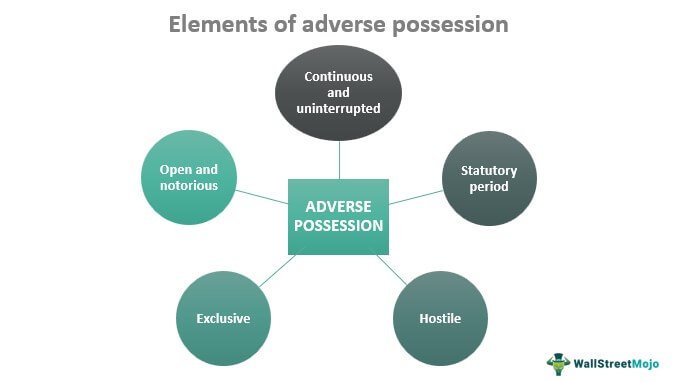
    This isn’t as simple as “just living somewhere for 12 years.” Courts require ALL of these elements to be genuinely satisfied:

    1. Actual possession — physically occupying and using the property, not just claiming it
    2. Open and notorious — the possession must be visible and obvious, not secretive
    3. Continuous — uninterrupted possession for the entire statutory period (12 or 30 years)
    4. Hostile/adverse — without the true owner’s permission, and against their interest
    5. Exclusive — the claimant possesses it exclusively, not sharing it with the actual owner or others

    If even one element is missing or the owner successfully challenges continuity, the adverse possession claim collapses entirely.

    12 Years vs 30 Years — Which Applies?

    • 12 years: Applies to private property, under the Limitation Act, 1963
    • 30 years: Applies to government-owned property — a much higher bar deliberately set to protect public land

    This distinction matters enormously in disputes, since occupying government land, even for decades, requires proving possession for a significantly longer, harder-to-establish period.

    Why Does This Law Even Exist?

    Honestly, I’ve gone back and forth on this myself. The logic is that land shouldn’t sit in legal limbo indefinitely — if a true owner genuinely abandons or ignores their property for over a decade while someone else openly uses, maintains, and treats it as their own, the law eventually recognizes that reality. It’s controversial, sure, but it does incentivize owners to actively monitor their property rather than leaving it neglected for decades.

    How to Protect Your Property From Adverse Possession Claims

    • Visit and inspect your property regularly, especially if it’s vacant land or an unused portion
    • Pay property taxes consistently — this creates a documented paper trail of ownership assertion
    • Fence or clearly mark boundaries to prevent unauthorized “open” occupation
    • Act immediately if you discover unauthorized occupation — filing a suit for possession interrupts the adverse possession clock
    • Avoid informal permissions without documentation — if you let a relative or tenant use land “temporarily,” get it in writing, since undocumented permissive use can later be twisted into a hostile possession claim

    What If Someone Files an Adverse Possession Claim Against You?

    Don’t panic, but do act quickly. You can defend by showing:

    • The possession wasn’t truly continuous (gaps break the claim)
    • The occupier had your permission at some point (this defeats “hostile” possession entirely)
    • You took legal action within the relevant period that interrupted their claim
    • The occupier’s possession wasn’t exclusive or open

    Courts place the burden of proof heavily on the person claiming adverse possession — it’s genuinely a difficult claim to succeed with, not an easy shortcut to stealing land, despite how it’s sometimes portrayed.

    [link to related guide on property title verification before buying land here]

    FAQ

    Q1. How many years of occupation are needed for adverse possession in India? 12 years for private property and 30 years for government property, under the Limitation Act.

    Q2. Can a tenant claim adverse possession against a landlord? Generally no, since a tenant’s possession is permissive, not hostile, which is a core requirement for adverse possession.

    Q3. What breaks an adverse possession claim? Interruption in continuous possession, the owner taking legal action, or proof that possession was permissive rather than hostile.

    Q4. Is adverse possession easy to prove in Indian courts? No, courts require strict proof of all elements — open, continuous, hostile, and exclusive possession — making successful claims genuinely difficult.

    Q5. Can government land be claimed through adverse possession? It’s theoretically possible but requires 30 years of qualifying possession, a much higher bar than private property claims.

    Q6. How can I stop someone from claiming adverse possession of my land? Regularly inspect and use your property, pay taxes, mark boundaries clearly, and take immediate legal action against unauthorized occupation.

    Conclusion

    Adverse possession law exists as a check against neglected, abandoned property — but it’s far from an easy or automatic claim, and genuine owners who stay reasonably vigilant rarely need to worry about losing land this way. If you own vacant or unused property, the simplest protection is also the most obvious: visit it, use it, document it, and act fast against any unauthorized occupation you discover. [link to related article on how to write a legally valid will in India here]

  • The Step Buyers Skip — And Regret Later

    The Step Buyers Skip — And Regret Later

    I can’t count how many property disputes I’ve come across that trace back to one thing: nobody did proper property title verification before the purchase. The excitement of finding “the perfect plot” or apartment often overrides basic due diligence — and that’s exactly when fraud, disputes, and litigation creep in.

    What Is Property Title Verification?

    Quick Answer: Property title verification is the process of legally confirming that the seller has clear, marketable, and undisputed ownership of a property before purchase. It involves checking ownership documents, encumbrance status, land records, and ensuring there are no pending litigations, loans, or claims against the property.

    Documents You Must Check

    1. Sale Deed / Title Deed — the primary ownership document, tracing the chain of ownership ideally 30 years back
    2. Encumbrance Certificate (EC) — confirms the property is free from any mortgage, loan, or legal liability
    3. Property Tax Receipts — recent payments confirm the property is properly registered with local authorities
    4. Mutation Records — confirms the property has been correctly transferred in revenue records after each sale
    5. Approved Building Plan / Layout Approval — for constructed properties, ensures the structure complies with sanctioned plans
    6. Occupancy Certificate (OC) — confirms the building is legally fit for occupation
    7. NOC from relevant authorities — society, municipal corporation, or development authority, depending on property type

    The 30-Year Title Chain Rule

    Here’s something many first-time buyers don’t know — lawyers typically trace ownership back at least 30 years, verifying every sale, inheritance, or transfer in that chain. Why? Because a defect anywhere in that chain — a disputed inheritance, an unregistered sale, a fraudulent transfer — can invalidate the current owner’s title, even decades later.

    Red Flags to Watch For

    • Seller unable to produce original documents (only photocopies)
    • Property under litigation or subject to a pending court case
    • Discrepancies between physical measurements and document measurements
    • Multiple claimants or unclear inheritance in case of ancestral property
    • Property mortgaged with a bank, without proper release/NOC documentation
    • Power of Attorney sales without proper verification of the original owner’s authorization

    Picture a buyer in Jaipur who finalized a plot purchase without checking the encumbrance certificate — only to discover post-purchase that the previous owner had an unpaid bank loan against the same property. That single oversight turned into a two-year legal battle to clear the title.

    Step-by-Step Verification Process

    1. Obtain certified copies of the sale deed and previous ownership documents
    2. Apply for an Encumbrance Certificate at the Sub-Registrar’s office
    3. Verify mutation records at the local revenue/municipal office
    4. Check for pending litigation through local court records or a lawyer’s search
    5. Confirm property tax payment status is current
    6. Physically verify boundaries match document measurements
    7. Get a lawyer’s title search report before finalizing payment

    Should You Hire a Lawyer for This?

    Honestly, yes — even though it’s an added cost. A property lawyer’s title search report typically costs a few thousand rupees, which is genuinely negligible compared to the risk of losing lakhs (or your entire investment) to a fraudulent or disputed property purchase.

    [link to related guide on adverse possession law in India here]

    FAQ

    Q1. What is an Encumbrance Certificate and why does it matter? It’s a document confirming the property is free from any mortgage, loan, or legal claims during a specific period, essential before any purchase.

    Q2. How far back should property title be verified? Lawyers typically trace ownership at least 30 years back to identify any defects in the chain of title.

    Q3. What happens if I buy a property with a disputed title? You could face litigation, loss of the property, or difficulty reselling it later — proper verification prevents this risk.

    Q4. Is it necessary to hire a lawyer for property title verification? While not legally mandatory, it’s strongly recommended given the complexity and risk involved in property transactions.

    Q5. What is mutation and why is it important? Mutation updates revenue records to reflect the current owner, which is important for tax purposes and future transactions.

    Q6. Can I trust a Power of Attorney sale without verification? No, PoA-based sales require extra scrutiny to confirm the PoA is genuine and properly authorized by the original owner.

    Conclusion

    Skipping property title verification to save a few thousand rupees in legal fees is genuinely one of the costliest mistakes a property buyer can make. Before you sign anything or transfer any money, get the encumbrance certificate, trace the ownership chain, and have a lawyer review the documents. That upfront diligence is what actually protects your investment, not the excitement of a good deal. [link to related article on power of attorney format in India here]

  • When You Can’t Be There in Person, But Still Need Things Done

    When You Can’t Be There in Person, But Still Need Things Done

    Managing property, banking, or legal matters when you’re abroad, unwell, or simply unavailable — that’s exactly the gap a properly drafted power of attorney fills. I’ve helped NRIs sort out property matters back home using this document more times than almost any other legal instrument.

    What Is a Power of Attorney?

    Quick Answer: A Power of Attorney (PoA) is a legal document authorizing one person (the agent/attorney) to act on behalf of another (the principal) in specified matters — financial, legal, or property-related. It can be General (broad powers) or Special/Specific (limited to a particular transaction), and both types can be registered for added legal validity.

    General PoA vs Special PoA — Know the Difference

    This distinction genuinely matters for how much authority you’re actually granting:

    • General Power of Attorney (GPA): Grants broad, wide-ranging powers across multiple matters — banking, property management, legal representation, and more. Because it’s so powerful, it also carries higher risk of misuse if given to the wrong person.
    • Special/Specific Power of Attorney (SPA): Limited to one specific transaction or purpose — say, selling a particular property or representing you in a single court case. Once that task is complete, the authority ends.

    My honest advice? Unless you have very strong trust and a genuine ongoing need, go for Special PoA. It limits exposure significantly compared to handing over broad General PoA authority.

    Essential Elements of a Valid PoA Format

    A properly drafted power of attorney should clearly include:

    1. Full names and addresses of both principal and agent
    2. Specific powers being granted — described clearly, not vaguely
    3. Duration/validity period, if applicable
    4. Conditions or limitations on the agent’s authority
    5. Signature of the principal, along with witnesses
    6. Registration details (if registered)

    Step-by-Step Registration Process

    1. Draft the PoA clearly specifying powers granted (professional drafting recommended for anything beyond simple matters)
    2. Print on appropriate stamp paper — stamp duty varies by state and type of PoA
    3. Sign before a Sub-Registrar or notary, depending on the nature and value involved
    4. Witnesses required — typically two, similar to will execution
    5. For property-related PoAs, registration at the Sub-Registrar’s office is often mandatory, especially if the PoA involves transfer of immovable property rights

    PoA for NRIs — A Slightly Different Process

    If you’re an NRI executing a PoA from abroad, the process involves:

    • Signing the PoA before the Indian Embassy/Consulate in your country of residence, or before a notary followed by apostille/attestation
    • Sending the attested document to India for registration or use
    • Ensuring the format complies with Indian stamp duty and registration requirements for the specific state where it’ll be used

    I’ve seen NRI clients get tripped up by skipping the embassy attestation step, only to have the PoA rejected by Indian authorities later — don’t skip this.

    Can a PoA Be Revoked?

    Yes, absolutely. The principal can revoke a Power of Attorney at any time (as long as they’re mentally capable), through a formal revocation deed, which should ideally be:

    • Registered, similar to the original PoA
    • Communicated clearly to the agent and any third parties who were relying on the original PoA
    • Published (in serious cases) as a public notice, to protect against unauthorized use of the old document

    Common Mistakes to Avoid

    • Granting overly broad General PoA when a Special PoA would suffice
    • Not specifying an expiry date or condition for the PoA’s validity
    • Failing to register PoAs involving property, leading to legal complications during transactions
    • Not revoking formally when the PoA is no longer needed

    [link to related guide on how to write a legally valid will in India here]

    FAQ

    Q1. What’s the difference between General and Special Power of Attorney? General PoA grants broad powers across multiple matters, while Special PoA is limited to one specific transaction or purpose.

    Q2. Is registration mandatory for a Power of Attorney in India? It’s mandatory for PoAs involving transfer of immovable property rights in most states, though not always for general matters.

    Q3. Can an NRI execute a Power of Attorney from abroad? Yes, typically through attestation at the Indian Embassy/Consulate or notarization followed by apostille, then registration in India.

    Q4. Can a Power of Attorney be cancelled once given? Yes, the principal can revoke it anytime through a formal, ideally registered, revocation deed.

    Q5. Does Power of Attorney transfer ownership of property? No, PoA only grants authority to act on the principal’s behalf — it does not transfer actual ownership rights.

    Q6. What happens to a Power of Attorney if the principal dies? It automatically becomes void upon the principal’s death, as the agent’s authority derives entirely from the principal’s continued legal existence.

    Conclusion

    A well-drafted power of attorney can genuinely simplify your life when you can’t be physically present for important matters — but only if it’s specific, properly registered, and given to someone you trust completely. When in doubt, opt for narrower Special PoA over broad General PoA; it’s a small precaution that prevents a lot of potential misuse. [link to related article on property title verification before buying land here]

  • Nobody Likes Thinking About It, But It Matters Enormously

    Nobody Likes Thinking About It, But It Matters Enormously

    Talking about wills makes most Indian families uncomfortable — there’s almost a superstition around it. But I’ve seen what happens when someone passes away without one: siblings who were close their whole lives suddenly fighting bitterly over property. Knowing how to write a will properly isn’t morbid, it’s genuinely one of the most protective things you can do for your family.

    What Makes a Will Legally Valid in India?

    Quick Answer: A valid will in India requires the testator (person making the will) to be of sound mind, at least 18 years old, and to sign it voluntarily in the presence of at least two witnesses who also sign it. Registration is not mandatory but is strongly recommended, as it adds legal weight and reduces the chances of the will being challenged later.

    Step-by-Step: How to Write a Will

    1. List all your assets — property, bank accounts, investments, jewelry, insurance policies, and any liabilities
    2. Decide beneficiaries clearly — name specific people and specify exactly what they receive, avoiding vague phrases like “my belongings to my family”
    3. Appoint an executor — someone responsible for carrying out the will’s instructions after your death
    4. Write the will clearly, either handwritten or typed — both are legally acceptable in India
    5. Sign in the presence of two witnesses — witnesses shouldn’t be beneficiaries under the will, to avoid conflict of interest challenges
    6. Get it registered (optional but recommended) at the local Sub-Registrar’s office

    Should You Get Your Will Registered?

    Technically, no law makes registration mandatory in India. But honestly, I’d always recommend it. A registered will:

    • Is harder to challenge or claim as forged
    • Is safely stored with the government registry, reducing risk of loss or tampering
    • Carries greater evidentiary weight if disputed in court later

    The registration fee is minimal — usually a few hundred rupees — compared to the cost and stress of a contested inheritance dispute down the line.

    Common Mistakes People Make

    • Vague asset descriptions — “my house” isn’t enough if you own multiple properties; be specific with addresses and registration details
    • Not updating the will after major life events like marriage, divorce, or birth of children
    • Using beneficiaries as witnesses — this can invalidate that specific bequest, even if the rest of the will stands
    • Not appointing an alternate executor in case the primary executor is unavailable or predeceases the testator
    • Forgetting digital assets — cryptocurrency, online accounts, and digital investments are increasingly relevant and often overlooked

    Can a Will Be Challenged After Death?

    Yes, unfortunately this happens often, especially in families with strained relationships. Common grounds for challenge include:

    • Alleged lack of mental capacity at the time of signing
    • Claims of undue influence or coercion
    • Suspicious circumstances around execution (no proper witnesses, unclear signatures)
    • Existence of a later, contradicting will

    A properly witnessed and registered will significantly reduces the chances of a successful challenge — it’s really your best defense against future disputes.

    What Happens Without a Will?

    If someone dies intestate (without a will), their property is distributed according to succession laws applicable to their religion — Hindu Succession Act, Indian Succession Act, Muslim Personal Law, etc. This process is often slower, more complicated, and can lead to disputes precisely because there’s no clear documented intent.

    [link to related guide on power of attorney format in India here]

    FAQ

    Q1. Is it mandatory to register a will in India? No, registration is optional, though strongly recommended for added legal protection against future disputes.

    Q2. Can a handwritten will be legally valid? Yes, a handwritten will is legally valid in India as long as it meets the basic requirements of sound mind, signature, and witnesses.

    Q3. Who can be a witness to a will? Anyone of sound mind and legal age can be a witness, but they should not be beneficiaries under the will to avoid conflicts.

    Q4. Can a will be changed after it’s written? Yes, through a codicil (an amendment) or by writing a new will that explicitly revokes the previous one.

    Q5. What happens if someone dies without a will in India? Their property is distributed according to applicable succession laws based on their religion, which can be more complicated than following a clear will.

    Q6. Do I need a lawyer to write a will? Not strictly required for simple estates, but for complex assets or family situations, professional drafting reduces the risk of future disputes.

    Conclusion

    Knowing how to write a will properly is one of those tasks that’s easy to keep postponing — until it’s genuinely too late. Take an afternoon, list your assets honestly, be specific about who gets what, and get it witnessed and registered properly. Your family will thank you for the clarity, even if it’s an uncomfortable conversation to start. [link to related article on succession laws in India here]

  • You Have More Legal Power in a Hospital Than You Think

    You Have More Legal Power in a Hospital Than You Think

    Most patients walk into a hospital and simply sign whatever form is put in front of them, assuming that’s just “procedure.” It genuinely isn’t just procedure — patient rights in India, particularly around informed consent, are legally enforceable, and violating them can expose hospitals and doctors to serious liability.

    What Is Informed Consent, Legally Speaking?

    Quick Answer: Informed consent means a patient must be given clear, understandable information about a proposed treatment or procedure — including risks, alternatives, and expected outcomes — before agreeing to it. Consent obtained without adequate disclosure is not considered valid, and treatment proceeding without proper consent can amount to medical negligence or even assault under law.

    Key Elements That Make Consent “Informed”

    For consent to genuinely hold up legally, it needs to include:

    1. Diagnosis — what condition is being treated
    2. Nature of proposed treatment/procedure — what exactly will happen
    3. Material risks involved — including rare but serious complications
    4. Alternative treatment options, if any exist
    5. Consequences of refusing treatment

    A signature on a consent form without this information genuinely being communicated doesn’t count as valid informed consent — courts have struck down “consent” obtained through vague, boilerplate forms.

    The Landmark Case Everyone Cites

    Samira Kohli v. Dr. Prabha Manchanda (2008) is the case most Indian medical negligence lawyers reference. The Supreme Court held that consent for one procedure cannot be extended to justify an entirely different procedure performed without separate consent — even if done during the same surgery, and even if the doctor believed it was medically necessary.

    This case genuinely reshaped how hospitals draft consent forms across India.

    Other Core Patient Rights You Should Know

    • Right to access medical records — patients (or their representatives) can request copies of their own treatment records
    • Right to a second opinion — no hospital can legally prevent this
    • Right to privacy and confidentiality of medical information
    • Right to be informed of costs before undergoing treatment or procedures
    • Right to refuse treatment, except in specific emergency situations where the patient cannot communicate consent

    When Can Consent Be Bypassed?

    There are limited genuine exceptions — primarily medical emergencies where the patient is unconscious or unable to communicate, and immediate treatment is necessary to save life. Even then, doctors are expected to inform family members as soon as reasonably possible and document the emergency justification clearly.

    What to Do If Your Rights Were Violated

    • Request complete medical records in writing immediately
    • File a complaint with the hospital’s grievance cell first
    • Approach the State Medical Council for disciplinary action against the doctor
    • File a consumer complaint for compensation if harm resulted
    • Consult a medical negligence lawyer if the violation caused serious injury

    Picture a patient going in for a minor surgery, only to discover afterward that doctors performed an additional, more invasive procedure “while they were already in there” — without separate consent. That’s a textbook informed consent violation, and it’s actionable under law, not just something to accept quietly.

    [link to related guide on filing a medical negligence case here]

    FAQ

    Q1. Is a signed consent form always legally valid? Not necessarily — if the patient wasn’t genuinely informed of risks and alternatives, the consent can be challenged as invalid.

    Q2. Can a hospital deny me access to my own medical records? No, patients have a legal right to access their own treatment records and reports.

    Q3. Can doctors perform additional procedures without separate consent? Generally no, as established in the Samira Kohli case — consent for one procedure doesn’t automatically cover another.

    Q4. What happens if treatment is given without informed consent? It can be treated as medical negligence, and in serious cases, even amount to assault under criminal law.

    Q5. Do emergency situations require informed consent? Immediate life-saving treatment can proceed without prior consent in genuine emergencies, but documentation of the necessity is expected.

    Q6. Can I get a second medical opinion without upsetting my current doctor? Yes, it’s a legal right, and no hospital or doctor can lawfully prevent or penalize you for seeking one.

    Conclusion

    Patient rights around informed consent aren’t fine print you can ignore — they’re legal protections designed to keep you in control of decisions about your own body. Next time you’re handed a consent form, actually read it, ask questions, and don’t sign until you genuinely understand what you’re agreeing to. That single habit protects you far more than any lawsuit filed after the fact. [link to related article on how to file a consumer complaint against a hospital here]